
- January 01, 2026
- Car Accident
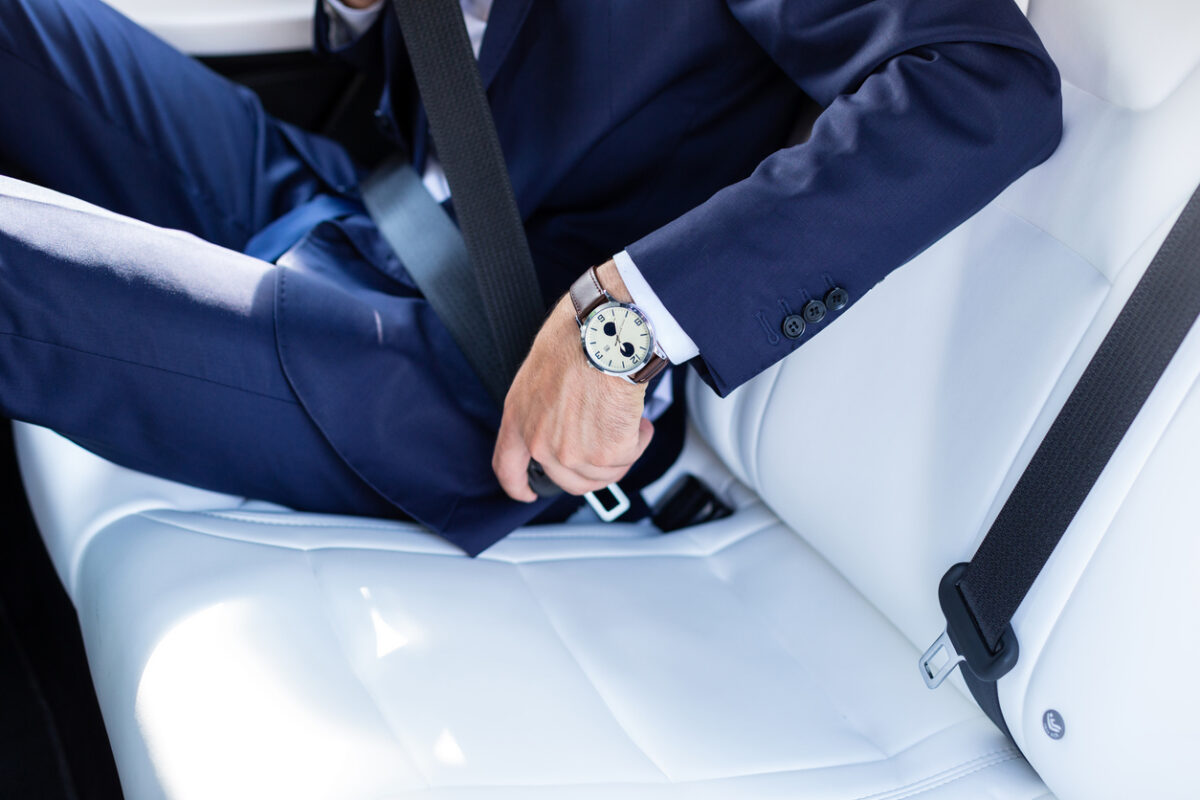
Washington’s seat belt law requires all vehicle occupants to buckle up, regardless of their seating position. Seat belts have been shown to reduce the risk of injuries and deaths in car accidents.
As a primary enforcement state, police can pull you over for a seat belt violation. The law applies to drivers and passengers in Yakima and throughout Washington. There are specific requirements for children based on age, weight, and height.
Washington Seat Belt Requirements for Adults
Washington seat belt laws are codified in RCW 46.61.688. All individuals in the vehicle who are 16 years of age or older must wear a seat belt. The safety belt must be securely fastened and properly adjusted.
The operator of a vehicle is responsible for ensuring that all children under the age of 16 comply with the law. They must either wear a safety belt or be securely fastened in an approved child restraint device, as required by RCW 46.61.687.
Child Restraint Laws in Washington
Washington law specifies the type of child restraint system that must be used based on a child’s age, as follows:
- Children under the age of two years: A child under 2 years old must be properly secured in a rear-facing child seat. They should remain in a rear-facing seat until they reach the height or weight limit set by the seat’s manufacturer.
- Children under the age of four years: A child who is under four years and not secured in a rear-facing seat as required by law must be properly secured in a front-facing child seat. They should use a front-facing child seat until they reach the height or weight limit set by the seat’s manufacturer.
- Children under four feet nine inches tall: Children who are not secured in a child safety seat as required by law and are under 4 feet 9 inches tall must be secured in a child booster seat. They should use a booster seat until they are old enough for the seat belt to fit properly. Typically, a child is tall enough for a seat belt between the ages of eight and 12 years.
- Children under 13 years old: Drivers transporting children under 13 years old must place the child in the back seat of the vehicle when it is practical to do so.
All child safety seats and booster seats must comply with the United States Department of Transportation’s standards. The seats should be installed in accordance with the instructions from the vehicle manufacturer and the child seat manufacturer.
The Washington Traffic Safety Commission provides information on child passenger safety resources.
Penalties for Seat Belt Violations
Violating Washington’s seat belt or child safety seat laws can result in a traffic infraction. Each unbuckled person in the vehicle is a separate violation. While violations do not add points to your license, you will incur fines if you are found guilty of violating seat belt laws.
The fine for not wearing a seat belt or using a child seat is $124, but it could vary depending on the circumstances and jurisdiction. Seat belt laws in Washington are primary enforcement laws. A police officer can initiate a traffic stop and issue a ticket for the sole reason of seat belt and child seat violations.
Exemptions to Washington’s Seat Belt Law
There are several exemptions to seat belt laws in Washington. Those include:
- Vehicles manufactured before January 1, 1968, that do not meet federal seat belt safety standards established under 49 C.F.R. Sec. 571.208 are exempt from seat belt requirements.
- Individuals with a medical or physical condition that prevents them from wearing a seat belt. This exemption requires a physician’s certification.
- Rural newspaper deliverers and postal carriers while on their designated routes.
Exceptions to seat belt laws are few. Even if an exception exists, it is best to prioritize safety and use a seat belt whenever possible.
How Seat Belt Use Affects Injury Claims
Some states allow testimony about the failure to use seat belts as a contributing factor in car accident injuries. In those states, failing to comply with child seat and seat belt laws could negatively impact a personal injury case.
However, Washington seat belt and child safety restraint laws specifically state that failure to comply with the requirements shall not constitute negligence. Failure to use a child restraint system or seat belt is not admissible as evidence of negligence in a civil action.
Even though the matter cannot be used as evidence in a lawsuit, an insurance company may raise the issue during settlement negotiations. Hiring an experienced car accident attorney ensures you understand your rights regarding an injury claim.
Contact a Yakima Car Accident Lawyer for Help
If you were injured in a car accident in Yakima or anywhere in Washington, you may be entitled to compensation for economic and non-economic damages. Montoya Hinckley Injury Lawyers has over 56 years of combined experience and a track record of tens of millions recovered.
Contact our team for a free consultation with a Yakima car accident lawyer to discuss your accident case.
For more information, please contact Montoya Hinckley Injury Lawyers at (509) 895-7373 to schedule a free consultation with a personal injury lawyer in Yakima or across Washington.
We proudly serve Yakima County and its surrounding areas.
Montoya Hinckley Injury Lawyers Yakima
4301 Tieton Dr, Yakima, WA 98908
(509) 895-7373
Hours: M-F 8 AM–12 PM AND 1–5 PM
Attorney Kevan Montoya
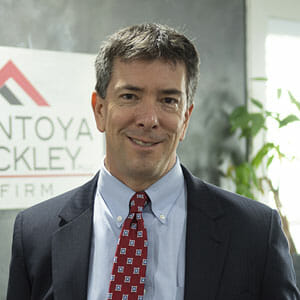 For over thirty years, Mr. Montoya has successfully represented clients in litigation involving multi-million dollar cases involving wrongful death, employment and business and commercial disputes. He regularly counsels businesses in Yakima and Central Washington on employment policies and helps businesses train employees regarding employment law compliance. He regularly speaks on employment issues. [ Attorney Bio ]
Attorney Tyler Hinckley
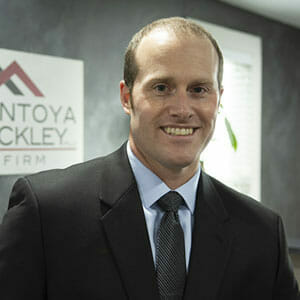 Tyler Hinckley represents individuals and businesses in state and federal court in litigation involving personal injury, property damage, employment claims, and business and commercial disputes. He represents individuals and businesses in a variety of employment cases, including wrongful termination, wage and hour, employment discrimination, and retaliation. Additionally, he represents individuals in residential construction defect and construction contract disputes, easement and boundary line disputes, and in cases involving damage to real property. Tyler also represents clients in administrative proceedings before state administrative agencies. [ Attorney Bio ]